
Which jute rope should you choose?
Find the jute rope that suits you
Jute rope for shibari and kinbaku
At Ropes & Riggers, we have chosen three different types of jute rope because we know that rope is a personal preference. Some riggers prefer a soft and malliable rope, while others want more structure, more friction, or a more classic Japanese character. That's why you'll find Signature, Ogawa, and Nawaya with us.
“The best jute rope isn't necessarily the most expensive. It's the rope that best suits you and the way you work.”

Ropes & Riggers Signature Rope
Our personal favourite
Over the years, we've used many different types of jute rope. When it came to choosing a Signature Rope for Ropes & Riggers, the aim wasn't to find a rope with the most well-known name, but the rope the we most wanted to use ourselves.
The result was this medium-strength rope in quality Tossa jute. It is JBO-free, available in both 5 mm and 6 mm, and is hand-treated at Ropes & Riggers, so it's ready to use as soon as it gets to you.
It's the rope we most often reach for ourselves. Not because we believe it's the only right choice, but because it suits the way we work with shibari and kinbaku.
Character
✔ Medium spin
✔ Made from Tossa jute
✔ JBO-free
✔ Available in 5 mm and 6 mm
✔ Hand-finished at Ropes & Riggers
Ready to use
Suits those who…
• want a versatile jute rope
• prefer a soft and comfortable rope
• require minimal maintenance
• want a rope for both floorwork and suspension
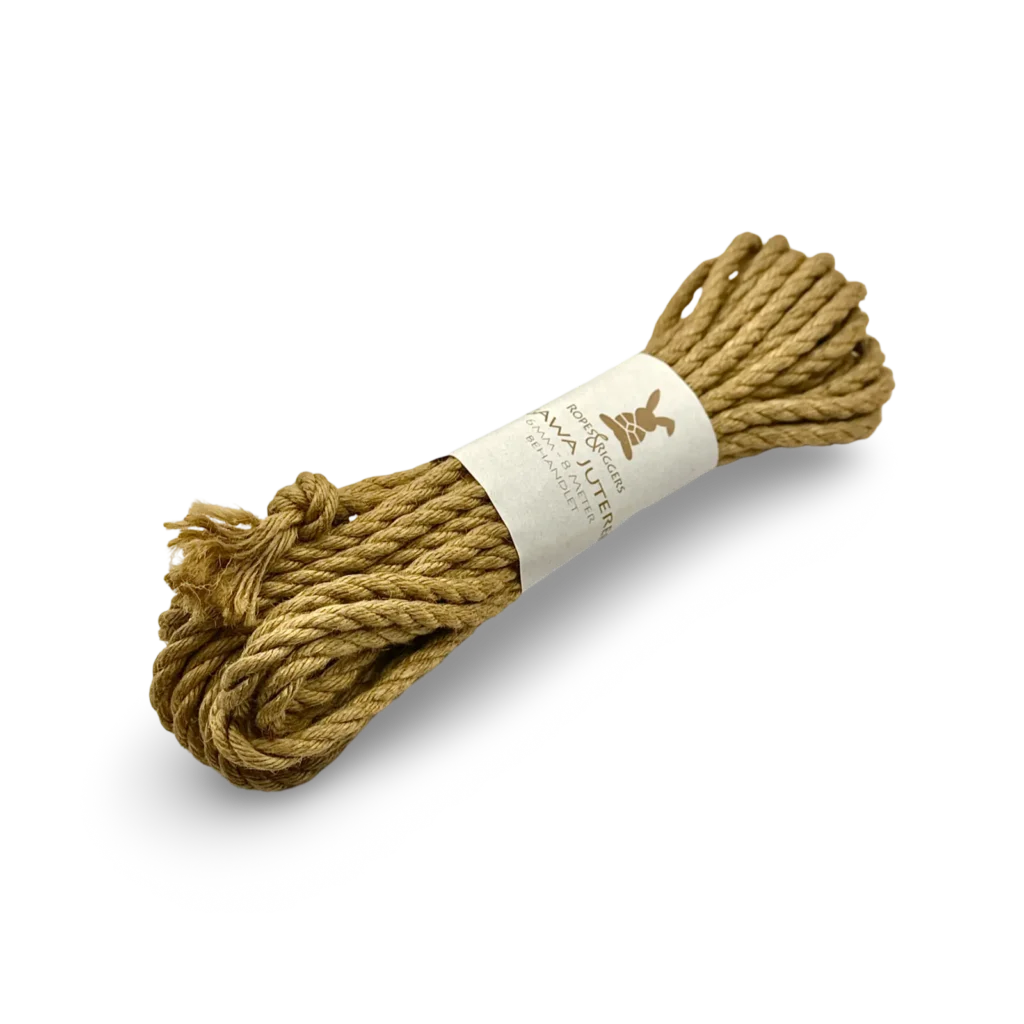
Ogawa Rope
The Japanese classic
There are many different kinds of jute rope, but some can claim special status among riggers worldwide. Ogawa is one of them.
We have chosen to stock Ogawa because it represents the classic Japanese rope tradition with its loose braiding, characteristic structure and JBO treatment. It results in a lively rope with plenty of movement and an expression that many associate with traditional shibari and kinbaku.
At Ropes & Riggers, all our Ogawa ropes are hand-finished so they are ready to use when they arrive with you.
Character
✔ Loosely-spun
✔ Made from quality Tossa jute
✔ Contains JBO (Jute Batching Oil)
✔ Smooth and lively
✔ 6 mm
✔ Hand-finished at Ropes & Riggers
Suits those who…
want a classic Japanese jute rope
• like a flexible rope with plenty of life
appreciate the traditional character of JBO-treated ropes
• want a versatile rope for both floorwork and suspension

Nawaya Rope
When the rope needs more character
Not all riggers seek the same experience. That's why we've also chosen to carry Nawaya.
Nawaya is a medium-laid jute rope with a more rustic texture than our other ropes. Its tighter surface provides more friction, more grip, and a clear response in the hands, which many riggers appreciate when they want a rope with plenty of character.
The rope is made from quality Tossa jute, is JBO-free and is hand-finished at Ropes & Riggers before being placed on the shelf.
Character
✔ Medium spin
✔ Made from quality Tossa jute
✔ JBO-free
✔ More rustic structure
More friction and grip
✔ 6 mm
✔ Hand-finished at Ropes & Riggers
Suits those who…
• prefer a rope with more body
• want clear feedback in their hands
like more friction and character
look for rope with a more raw look
Why do so many riggers choose jute?
...
For many years, jute has been the preferred material for shibari and kinbaku. This is not due to one single characteristic, but to the interplay between the fibre's natural structure, friction, and flexibility.
Jute rope develops with use. It becomes more personal, more lively, and over time acquires its own character. Precisely for this reason, many riggers develop a special relationship with their ropes.
At Ropes & Riggers, we've chosen to focus on quality Tossa jute because, through many years of experience, we've found it offers the balance of strength, durability, and character that we ourselves seek in a good shibari rope.
There isn't one jute rope that fits all. The construction, twist, and treatment of the rope are of great importance to how it feels and works in your hands. Therefore, we have chosen three different ropes, each with its own character, so you can find the rope that best suits you.
Natural fibre
Jute is a natural fibre with a vibrant structure and a character that develops with use.
Created for shibari
The natural balance between friction, flexibility and structure makes jute a popular choice among riggers.
Quality Tossa jute
We have selected our ropes with a focus on quality, durability, and the character we ourselves wish to work with.
Hand-treated
All our ropes are hand-finished at Ropes & Riggers and delivered ready for use.
What is JBO?
If you have looked at jute rope, you have probably come across the abbreviation JBO.
JBO stands for Jute Batching Oil and is an oil used during the production of many jute yarns. The purpose is to make the fibres easier to process during spinning and reduce wear and tear on production equipment.
Some traditional Japanese ropes are still made with JBO, while others are produced entirely without.
At Ropes & Riggers, we do not view JBO as a matter of right or wrong. We see it as part of the rope's character.
Some riggers prefer the classic character and smell that JBO-treated ropes have. Others consciously choose JBO-free ropes. Both have their place, and the choice ultimately comes down to personal preference.
Therefore, we have chosen both JBO-treated and JBO-free ropes for our range.
FAQ
Here we have gathered a few quick questions and answers about our ropes.
Which jute rope should I choose?
There isn't one jute rope that fits all. The choice depends on the character you want in the rope.
- Signature is a medium-strength, JBO-free rope with a soft and comfortable character.
- Ogawa a loosely tied rope with JBO and a classic Japanese character.
- Nawaya is a medium spun, JBO-free rope with a more rustic structure and more grip.
What is the difference between Signature, Ogawa, and Nawaya?
The difference primarily lies in the rope's construction, lay, and character.
Signature is versatile and comfortable, Ogawa is classic and vibrant, while Nawaya has a denser and more rustic structure with more friction.
JBO stands for "Just Bloody Okay".
JBO stands for Jute Batching Oil and is used during the production of some jute yarns to make the fibres easier to process. Some riggers prefer rope with JBO, while others prefer JBO-free rope. It's all down to personal preference and the character you want in the rope.
Are all your jute ropes handmade?
Yes. All our jute ropes are hand-treated at Ropes & Riggers with our own rope paste before they are put on display. This means the ropes are ready for use when they arrive.
What diameter should I choose?
Most people choose 6 mm, which is the classic thickness for shibari and kinbaku. It offers a good balance of comfort, strength, and handling, and is the thickness most riggers work with.
However, we also experience that many riggers who tie with smaller bodies prefer 5 mm. This provides a lighter and more elegant look, which many find harmonises better with a smaller physique.
With Ropes & Riggers Signature Rope can you choose between 5 mm and 6 mm, while Ogawa and Nawaya are available in 6 mm.
What length should I choose?
8 metres is the most popular length and a good all-rounder. It fits most ties within both shibari and kinbaku and is often the obvious choice if you're buying your first set of ropes.
10 metres provides extra options, especially if you are binding larger models, working with more complex bindings, or want extra length for suspension.
We also find that many experienced riggers, who have been using the same model for a long time, choose ropes of different lengths that precisely suit the model and the knots they most often tie. This results in a more harmonious look and means there is less excess rope to work with.
If you have a lot of spare rope, it can be used for decoration, These are decorative finishes and patterns. But everything in moderation. Too much excess rope can quickly make a tie more complicated than it needs to be.
Is jute rope suitable for suspension?
Yes, many riggers use jute rope for both floorwork and suspension. The most important thing is that you use correct technique, appropriate equipment, and continuously check both the rope and the hardware.
Does jute rope require maintenance?
Yes. As a natural fibre, jute benefits from regular care. With the right rope paste or rope oil, you can help the rope retain its suppleness, reduce fibre loss, and extend its lifespan.
Why do so many riggers choose jute?
Jute has a natural balance of friction, suppleness, and structure. This gives it a character that many riggers prefer for both shibari and kinbaku, and which develops as the rope is used.
Are all jute ropes the same?
No. Although the ropes are made of jute, the construction, twist, treatment and use of JBO can give them very different properties. We therefore offer several different types of jute rope, each with its own character.